
Timing Belt Replacement at Auto Service Specialists
What is a Timing Belt?
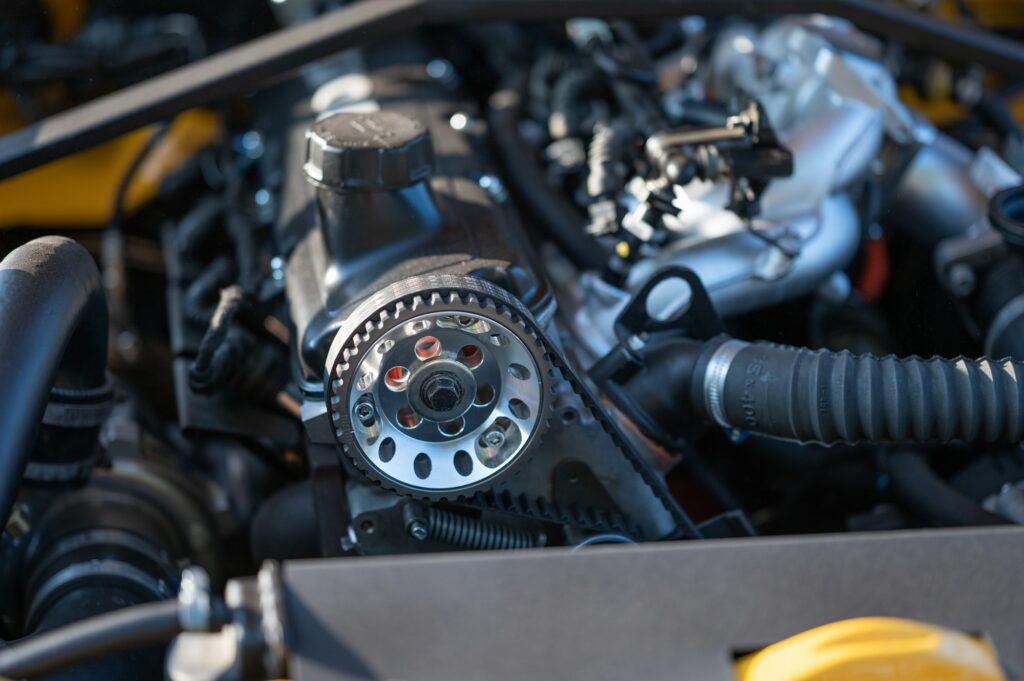
When it comes to timing belts, it’s all in the name. The timing belt keeps your car’s valves, pistons, camshafts and crankshaft all rotating in sync. This belt controls when the camshaft(s) opens and closes the intake and exhaust valves, and it controls the crankshaft, which moves the pistons up and down inside the engine cylinders.
Does My Car Have a Timing Belt? Timing belts are very common, especially in four-cylinder engines. That being said, there is no hard, fast rule about which vehicles have timing belts and which ones have timing chains. Your best is to look it up in your owner’s manual or to ask your friendly team at Auto Service Specialists, of North Royalton, Ohio.
Why Do I Need to Replace my Timing Belt?
Over time and miles, timing belts become worn, and this isn’t something you want to gamble with.
There are few, if any, warning signs before a timing belt snaps, and if it does, your car or truck will stall immediately and come to a stop, breaking down wherever you happen to be. This means a call to a tow truck and an unexpected auto repair bill—and this is the best-case scenario.
Worst case: Your internal engine parts collide, the engine seizes, and you’re left with a repair can easily add up to $2,000 or more. (Watch this video to see what happens when the engine seizes)
When Do I Need to Replace my Timing Belt?
Timing belts are nearly impossible to visually inspect, and they do not show signs of cracking and wearing. The best insurance is to replace the timing belt according to your vehicle’s factory-recommended maintenance schedule.
Manufacturers typically recommend a new timing belt at 90,000 or 105,000 miles. Your owner’s manual will tell you what is recommended for your vehicle. You can also look up the timing belt replacement interval online (such as at: www.MyTimingBelt.com). If you’re not sure, ask Auto Service Specialists, and we’ll be happy to help provide the information.
Even though replacing the timing belt typically costs several hundred dollars, it pales in comparison to the expense and inconvenience of a broken timing belt. Do yourself a favor and plan ahead for this auto service requirement.
When is your timing belt due?
When it comes to car servicing, timing belt (cambelt) replacement is without doubt the most important serviceable component of a car’s engine. The timing belt has an incredibly important job controlling the camshafts in the engine and keeps it running smoothly, if left unchanged and it breaks, it can seriously lighten your wallet.
It is important that you know the change interval of your timing belt as going over the manufacturers’ recommendation can lead to a slipped or snapped belt. In many cases this requires a new engine or engine build costing hundreds if not thousands of dollars.
What Else Should Be Done at the Same Time?
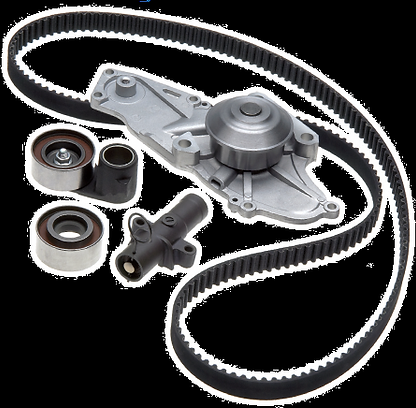
In most cases, several other items need to be addressed at the same time as the timing belt. Even though it adds more to the cost now, it will save you in the long run. These additional items include:
● Replacing the water pump.
● Replacing the drive belts (a.k.a. accessory or serpentine belts).
● Inspecting the timing belt tensioner.
● Inspection the timing belt idler pulley(s).
The right time to replace timing belts.
Timing belts are considered wear items and should be checked according to the manufacturer’s recommended service schedule. Most manufacturers suggest replacing the belt between 60,000 to 105,000 miles. Check your owner’s manual or ask a Auto Service Specialists Technician about the specific schedule for your vehicle. A broken timing belt will stop your car…instantly. It can also result in costly engine damage and inconvenience.
Free-Running or Interference Engine?
An engine is either “interference” or “free-running” depending on its design. If the timing belt breaks in an interference engine , an open valve may be struck by a moving piston. This can result in serious damage and expensive repairs, and in some cases a new engine. A “free-running” engine design will not
result in extensive engine damages should the timing belt fail.

The motorist will still have to deal with the inconvenience of being stranded, towing expense, and the cost of timing belt replacement.
Tensioners and idlers are critical components that work hand in hand with the timing belt.
Tensioners and idlers work together to keep the timing belt properly tensioned. The timing belt system uses idlers and/or pulleys to either change the direction of the belt or transmit power to a component such as a water pump or oil pump.
Why replace tensioners and idlers?
Worn tensioners or idler pulley bearings are the leading causes of timing belt failures. Like timing belts, tensioners and idlers wear out. They need to be replaced before they fail.
The right time to replace tensioners and idlers.
Tensioner and idler wear is difficult to detect. Many tensioners that look okay may be at or near the end of their service life. In some cases, the newly installed timing belt may fail after a few thousand miles if the tensioner or idler is worn or loose.
Should timing belt driven water pumps be replaced?
You can save considerable expense by replacing your already high mileage water pump at the same time you have the timing belt replaced. In both cases the labor cost is a large part of the expense and the labor procedures are basically the same. Doing everything at the same time will result in big long term cost savings. Ask a Auto Service Specialists service advisors to explain the components involved with your particular make and model.
Save money by asking for a timing system replacement.
When you replace your timing belt have your tensioner, idler and water pump changed at the same time because the additional cost is insignificant compared to the cost of accessing the timing belt. Your
service technician can do it right the first time because he doesn’t have to re-do all the labor again to replace the tensioner, idler and water pump. Your new timing belt will be protected from damage caused by failure of these parts.
Why Choose Auto Service Specialists for Your Timing Belt Replacement?
When your vehicle is due for a new timing belt, Auto Service Specialists, of North Royalton, Ohio offers everything you’re looking for and more:
● Competence: Our certified ASE-Master Automotive Technicians are among the best of the best. They are an amazing powerhouse of skill who expertly manage every auto repair or diagnostic challenge we send their way.
● Peace of Mind: We stand behind all of our repairs ask us about our warranty.
● Time Savings: We offer free loaner cars and a free shuttle service.
● Accuracy: The final bill will never be more than what we quoted you.
Timing belt replacement: Avoid a breakdown in North Royalton, Ohio.
For many of us, replacing our vehicle’s timing belt isn’t a top-of-mind activity. But knowing when this critical engine part needs to be replaced can save you hundreds of dollars and a sudden, aggravating breakdown.
Here’s why…
When it comes to timing belts, it’s all in the name. The timing belt keeps your car’s valves, pistons, camshafts and crankshaft all rotating in sync. This belt controls when the camshaft(s) opens and closes the intake and exhaust valves, and it controls the crankshaft, which moves the pistons up and down inside the engine cylinders.
Over time and miles, timing belts become worn and they need to be replaced as part of your vehicle’s preventive maintenance schedule. This is not something you want to gamble with.
There are few, if any, warning signs before a timing belt snaps, and if it does, your car will stall immediately and come to a stop wherever you happen to be. This means a call to a tow truck and an unexpected auto repair bill—and this is the best-case scenario.
Worst case: Your engine pistons and valves collide, leaving you with internal engine damage, anything from bent valves to a broken piston. In some cases, the valves can snap and damage the cylinder head as well. Often, the full extent of the damage isn’t even known until your technician disassembles the top part of the engine, removing the valve cover(s) and sometimes the cylinder head. This spells a repair that can easily hit the $2,000 and up range.
So when do you replace your timing belt? Manufacturers typically recommend a new timing belt at 90,000 or 105,000 miles. Your owner’s manual will tell you what is recommended for your vehicle. If you’re not sure, ask us and we’ll be happy to help provide the information.
It’s also important to note that, unlike serpentine or accessory belts, timing belts are nearly impossible to visually inspect. They do not show signs of cracking and wearing the same way accessory belts do, and they’re usually buried under a number of plastic engine shields and other components. The best insurance is to replace the timing belt according to your vehicle’s factory-recommended maintenance schedule.
When replacing your timing belt, it’s also smart money to replace the water pump at the same time. A water pump’s normal life span may not be much more than 100,000 miles, and the water pump is usually located behind or beside the timing belt. In those cases, it doesn’t cost that much more to replace the water pump when you’re already removing all the components required to access and replace the timing belt. If you replace the timing belt at 90,000 miles, you do not want to essentially do the same repair again in 10k or 20k — this time to replace the water pump. It’s much easier on the wallet to do both at once. The same is true for the timing belt tensioner – it should be inspected for wear and replaced if needed.
Can you hear the dollar signs adding up as you read this? Even though replacing the timing belt at the specified mileage typically costs several hundred dollars, it pales in comparison to the expense and inconvenience of a broken timing belt. Do yourself a favor and plan ahead for this auto service requirement. And if you have questions or need to buy some time, talk to us. We’re here to help! Schedule an appointment now
Also See: Serpentine Belt Replacement